
I have spent a good part of this year thinking with AI about what thinking with AI means for us, individually and collectively. The answers, it turned out, were far less important than the experience itself. It took me a while to realise this.
Babies Don’t Want Hands
Watching my nephew learn to walk came with the expected wobbles, falls, and determined repetitions. What I hadn’t expected was the moment he refused a steadying hand. Even before he could speak, he could say, “I want to do it myself.” The drive to struggle until competent runs early and deep.
What all that falling builds is not just walking. It builds is the capacity to acquire a capacity: the physical and psychological muscle that lets him learn the next hard thing, and the one after that.
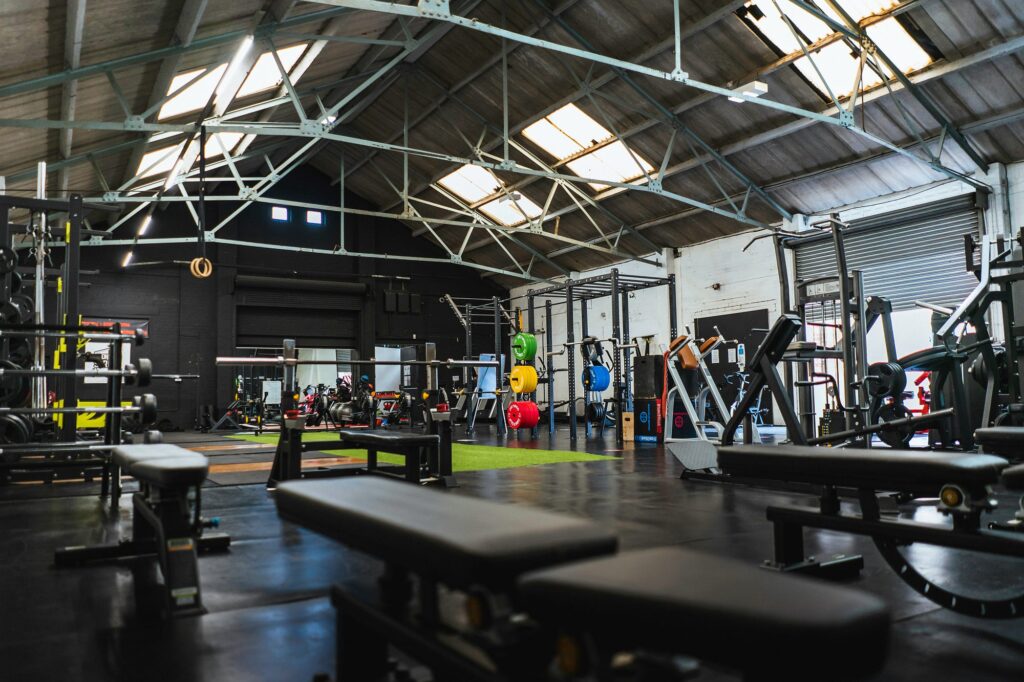
Photo by Samuel Girven
Muscle, not Medal
We have it backwards. We treat knowledge as the trophy and effort as the means to reach it. It is the other way round. Knowledge has never been cheaper. Now, beyond accessing facts, we can get AI answers built upon synthesis of these facts (with the occasional lie thrown in to keep us on our toes), served with garnish on a plate.
AI is itself “trained” through struggle, iterating many orders of magnitude more times than my nephew to get its “guess” at the next pixel or token of text “right”. In an earlier piece I asked what we are delegating to these tools, what we are retaining, and what we are gradually losing the capacity to work out on our own. I see it all now as muscle atrophy.
Social Atrophy
There is a more pervasive and insidious consequence of skipping to the answers. When you work hard at a problem that matters to you, you produce two things. The muscle, which is yours. But something else slips out into the world, perhaps riding on your sense of accomplishment and pride: a blog post, an academic paper, a conversation with a colleague or friend.
Three researchers at MIT recently modelled this second effect mathematically. The common store of human knowledge, they point out, was never anyone’s project to protect. It was the byproduct of private struggling to build new knowledge on top of a general base of knowledge, to stretch, to grow. Stop struggling, stop sharing, and it slips away until the general base itself (at least within this model) is in danger of collapse.
This is cognitive debt writ socially large, and the cruel part is that the bill often lands on a generation that never had the pleasure of running it up.
Their proposed fix is to make the answer machine worse on purpose, dialling down its quality so a little struggle survives. I understand the logic and I think it is a mistake. You do not save a deeply ingrained instinct by sabotaging the thing that threatens to replace it. You save it by working out how it works, why it matters, and doubling down.
AI in the Gymnasium
We have done this before, and it worked. The calculator put arithmetic in the palm of our hand two generations ago. We kept drilling the times tables anyway, not for results we had already charted, but for numeracy. We looked at struggle, saw what it was for, and baked it into the path to adulthood early on.
That is the precedent. Do not dull the tool. Make it our gym buddy and spotter. Make us stronger because of it.
Recent classroom trials show the split plainly: an AI that hands students the answer leaves them weaker the moment it is taken away, while one that holds the answer back until they have done the work leaves them stronger. AI can even help with tailoring study to individual needs. Just don’t let your spotter do the lifting for you.
Do the Reps
Education used to focus heavily on memorisation, distributing the storage of knowledge across a population when few other preservation options existed. The printing press, then internet, and now AI, have made it cheaper and cheaper to store and access knowledge without an educational intermediary, or even social interaction at all. Some atomic truths (2+2) are essential, but equally urgent is the need to facilitate enough struggle to build fact-finding, fact-checking, and (critically) apparatus to make sense of facts in context, and to share them in constructive dialogue.
AI can then do a lot of heavy lifting. But you have to get strong the slow way first. The articulate generalist who can check assumptions, keep track of clear outcomes, and contextualise information will thrive in the AI era. However, they are not born this way. These skills are built up, rep by rep.
Story is Everything
We can only build what we can first picture, and right now we are picturing tools that spare us every effort, as though effort were the enemy. We then draw this out to the conclusion that it will replace us, and the tools become the enemy. The real danger is that in the midst of both loving and hating it, we are letting it reductively define who we are.
Pope Leo XIV’s recent encyclical, Magnifica Humanitas, reframes a timeless church message into the AI age: human dignity does not depend on what a person produces. I have written before that humanity is not a search space to be optimised. Here is the same conviction in theological language. A person is not their output. A person is the capacity to grow, and the struggle is not a cost we should be racing to eliminate. It is where growth happens. Optimise it away and you have not freed the human. You have removed the very mechanism that makes us human.
The Primal Gift
The task is even bigger than a global policy fight, or a theological conversion. Yet we are better poised to succeed at it that we might think. We only need to look a little harder at what got us where we are. Rather than trying to hold back this new technology, we should be trying to understand how it can help us, even force us, to grow.
Ask, of every clever shortcut, not only, “Is this the right answer?” but, “Have I learned something new?” Build the tools that strengthen us into our path toward adulthood, and into our daily lives. Keep improving the gym, especially for the young.
Knowing the answers was never the point. The muscle that got us there was. We are born with the instinct to struggle. Let’s recognise that primal gift, and protect it, not against AI, but with it. Most of all, let’s protect it from ourselves.