“Once I said, Death is God and change is His prophet. / Now I have calmed down, and I say: / Change is God and death is His prophet.”
“Time is a coffin, while nakedness is the daily news.”
Contemporary political discourse about the Middle East often underscores the divide between Israelis and Palestinians. But in reading and re-reading the poems of Yehuda Amichai, one of Israel’s most celebrated poets, and Ibrahim Nasrallah, one of the foremost Palestinian poets of his generation, what strike me are the similarities.
Obviously, the physical landscape they describe is the same–but beyond this, their inner landscape of grief and hope, forged in the intensity of a war-torn homeland, steeped in ancient traditions, yields poems at once timeless and immediate, universal almost to the point of allegory, yet also deeply and achingly personal.
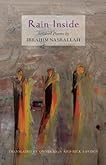
What interests me most is how each poet finds hope in the midst of the violence and uncertainty of such long-standing conflict. In Nasrallah’s poem “Beginnings,” the speaker describes to his lover a passionate vision of a hopeful future:
…
when I am able to freely place a gentle kiss
on your cheek in public,
when I am able to return with you after midnight
without a police patrol desecrating our bodies
in search of a confession,
when we can run in the streets
without anyone pronouncing us crazy,
when I am able to sing
and share a stranger’s umbrella
and when she in turn may share my loaf of bread,
when you are able to say I love you
without fear of death or imprisonment
and I can open a window in the morning
without being silenced by a bullet
…
Even as Nasrallah holds out this vision, he does so in contrast to great difficulties–some ostensibly real, such as curfews and dangerous, bullet-ridden streets; others more extreme–such as fearing death or imprisonment for saying “I love you,” or being killed simply for opening a window. Yet the juxtaposition of the real difficulties against the more strange, or at least strangely-described ones, only serves to underscore the absurdity of the real oppression, and thereby heighten the deliciousness of freedom.
Amichai, by contrast, seems to find a kind of hope, and an affirmation of his humanity, in his willingness to keep asking the difficult questions, and in a “we shall see” attitude toward life. Consider this excerpt from the third section of “Once I wrote ‘Now and in Other Days’:”
…
… When we sang, “This is the last battle,” I believed,
and when they told me “This is the last supper” I believed. Since then
my life has been filled with last battles and last suppers, like the last wish
of a death-row inmate. …
…
… And the measure of justice and the measure of mercy were like
getting measured for shoes–to this day I buy shoes a size too big,
so they won’t pinch my feet. …
…
They told me “I’ll be back” and I am still
waiting, and they told me “I’ll never come back”
and I am still waiting. And when they told me “Don’t ask,”
I began to ask, and I have not stopped asking since.
Again, like Nasrallah, Amichai intersperses his poem with a poetically described hardship–constant uncertainty–but he does so, not with visions of actual freedom, but with whimsy (the shoes) and chutzpah (“I have not stopped asking since.”) These qualities would seem to be a survival skill for the constantly-disappointed speaker as he endures dangerous times.
Each poet presents an incredible vision of what it means to nurture and reinvent one’s humanity in the midst of a bitter, age-old conflict. And strangely, in this way, they would seem to be more united–in the realm of poetry–than divided. That is, each has found solace in poetic terms where no resolution has, as yet, been reached politically.
Perhaps Plato got it wrong. Rather than banishing poets from a healthy republic, they should be called upon to remind us–in ways that philosophers and even theologians often cannot–of our fundamental humanity, and how, even in the midst of long and seemingly endless conflict, we can and must make meaning–and find hope.
Recommended Reading: